IVF involves stimulating the ovaries to produce multiple eggs, retrieving these eggs, and fertilising them with sperm in a lab. The resulting embryos are then transferred to the uterus, with the aim of achieving a successful pregnancy.
No two IVF journeys look the same, and Dr Rozen doesn’t treat them as if they do. Her approach combines thorough diagnostic testing of both partners, evidence-based treatment decisions, and genuine attention to the emotional demands that IVF can place on patients and their loved ones.
IVF is a fertility treatment that supports conception outside the body. Rather than fertilisation occurring naturally in the fallopian tube, eggs are collected from the ovaries, fertilised with sperm in a laboratory, and the resulting embryo is transferred directly into the uterus. It’s one of the most well-established assisted reproductive technologies available, and for many, IVF can open a pathway to parenthood that might otherwise be out of reach.
IVF follows a series of steps, each carefully monitored by Dr Rozen and her team.
Hormone injections are used to encourage the ovaries to produce multiple eggs over around 10 to 14 days. Blood tests and ultrasounds monitor progress throughout, then once the follicles reach the right size, a final hormone injection, called a trigger injection, is given to mature the eggs and prepare them for collection.
Around 36 hours after the trigger injection, eggs are collected from the ovaries under light sedation. The procedure is guided by ultrasound, takes less than 30 minutes, and is performed as a day procedure.
The collected eggs are combined with sperm in the laboratory on the same day as retrieval. If needed, ICSI can be used, where a single sperm is injected directly into an egg by a skilled embryologist. The fertilised eggs are then monitored as they develop into embryos.
After three to five days of development, the most suitable embryo is selected and transferred into the uterus using a thin catheter. It is a straightforward procedure that doesn’t require anaesthesia. Any remaining good quality embryos can be frozen for future use.
Around 10 days after the transfer, a blood test confirms whether the embryo has implanted and pregnancy has been achieved. If the result is positive, early pregnancy monitoring begins.

Every IVF recommendation follows comprehensive testing of both partners. Treatment without a clear diagnosis is just guesswork.
Every aspect of the plan, from stimulation protocols to embryo selection, is tailored to each patient’s individual circumstances and goals.
IVF can be physically and emotionally demanding. Dr Rozen’s practice is dedicated to supporting patients equally through the emotional and clinical side of the treatment.

“IVF is an incredible tool, but it’s not the right answer for everyone, and it’s not something I recommend without first understanding the full picture. When it is the right path, I want every patient to feel informed, supported, and confident going into it.”
– Dr Genia Rozen, Fertility Specialist, Genea Melbourne City and Frankston
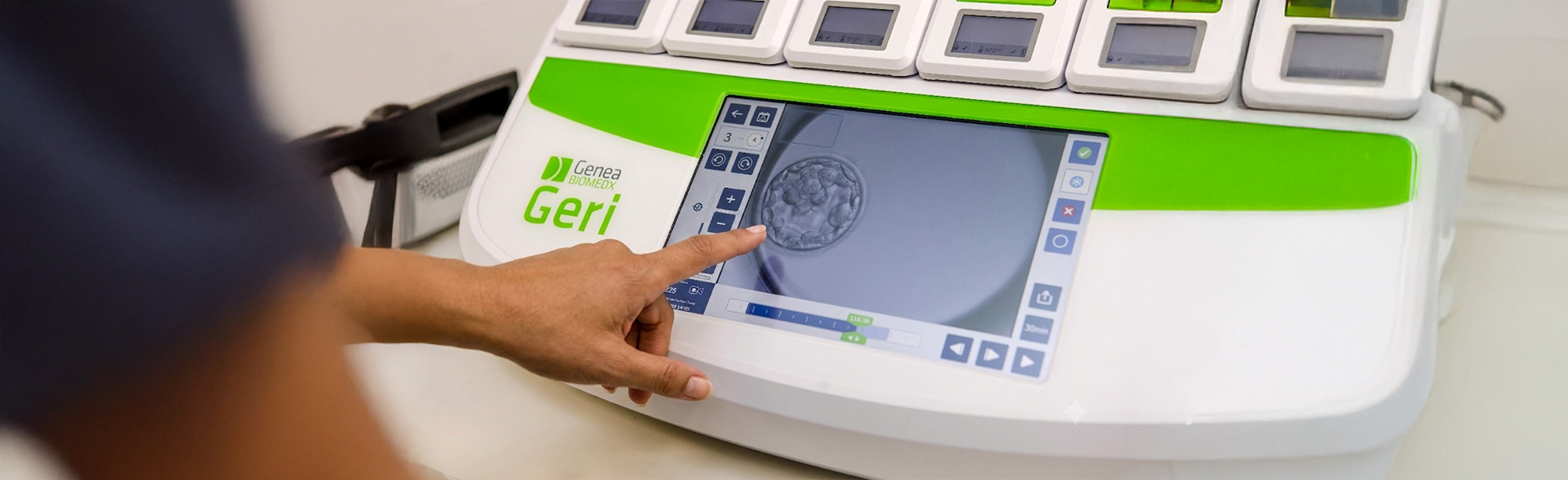
The laboratory where embryos are cultured plays a role in IVF outcomes. Dr Rozen consults with Genea Fertility, who have been at the forefront of reproductive science in Australia for over 35 years. Genea achieves IVF success rates above the national average1 thanks to experienced embryologists, advanced genetic testing and embryo selection, and the exclusive Geri® incubator system, which offers continuous time-lapse embryo imaging.
